
Epsilon
University of Michigan
About the Chapter
Contributing author: Bro. Richard E. Smith, MD, Epsilon ’70
“Preamble 1908
We the undersigned students of the University of Michigan in order to promote a higher standard of fellowship and to draw the bonds of fellowship close among the Negros of this institution do form ourselves into a society to be known as (to be determine) Chapter of Alpha Phi Alpha, the right to such name being granted up by the National Organization of Alpha Phi Alpha.”
– (Meeting Minutes, 1908)
As the 1908-09 school year began, there were only a few African American students enrolled at the University of Michigan. Dormitories and fraternity houses were few and completely segregated. Enrollment at Michigan was about 5,000, comparable to that of Harvard and Yale University, but twice that of Princeton. African American students were few, most had previous advanced education at other small colleges. The Michigan Daily reported that by 1911 the University of Michigan was third in the nation behind Oberlin and Kansas University for the number of African Americans enrolled.[1] That number was 39.
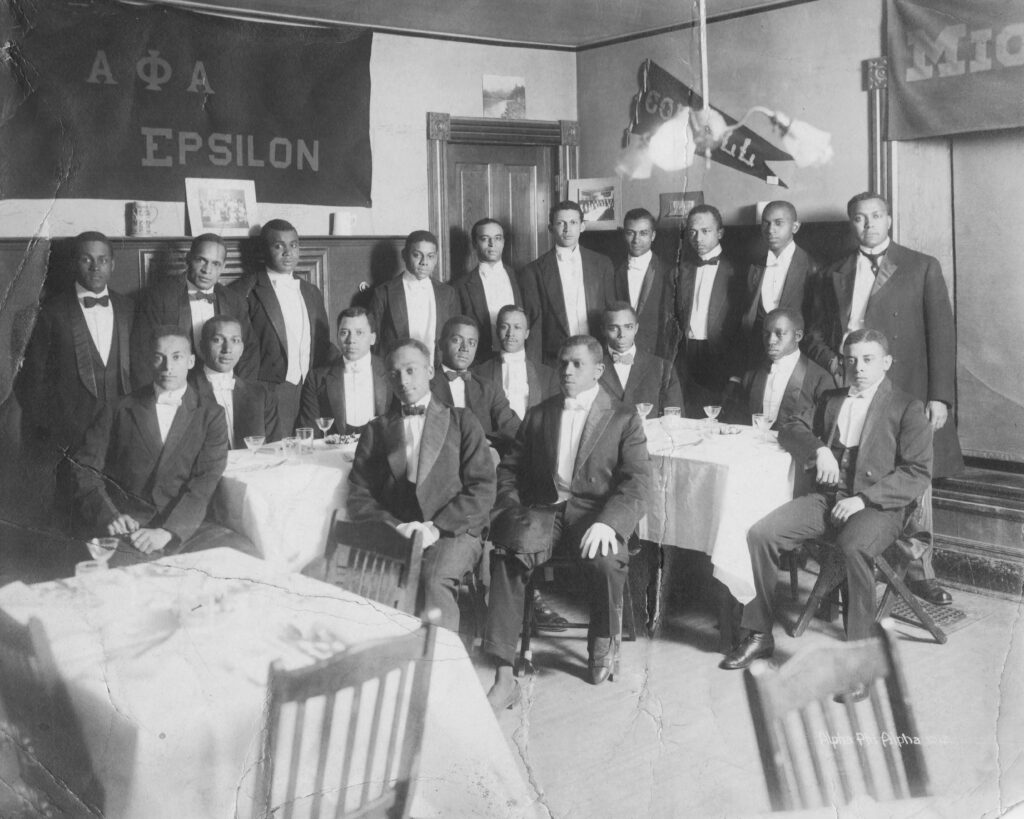
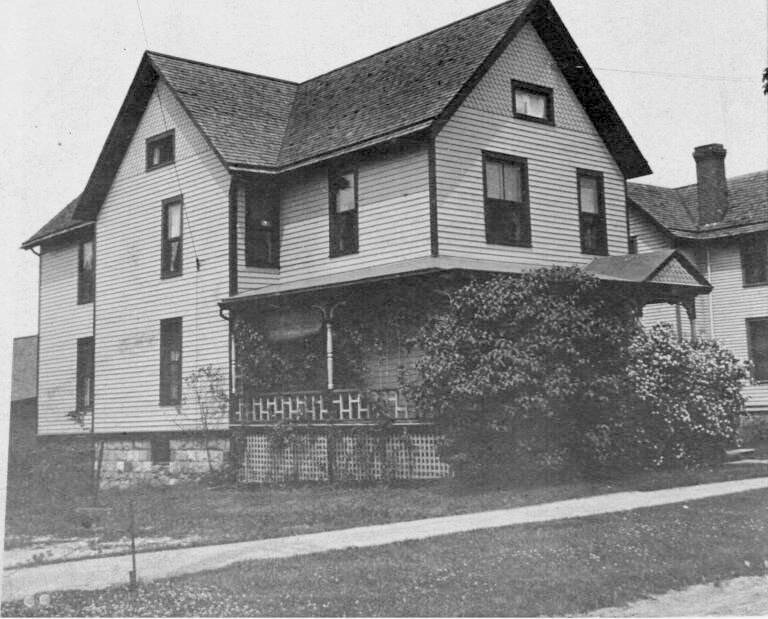
African American students lived in the segregated part of Ann Arbor, near the railroad terminal and below the medical school. There were specific houses that rented to African American women and men. One of these houses was at 1017 Catherine Street in the now historic area of Ann Arbor. The area at the time was located in the Negro section of town, a few blocks from the medical school as well as a short distance to the railroad tracks. In segregated Ann Arbor, the small number of Negro students in 1908 had to find their own living quarters. This House of Alpha was a stimulating environment for the growth of academic excellence, leadership and a haven for brotherhood for decades to come.
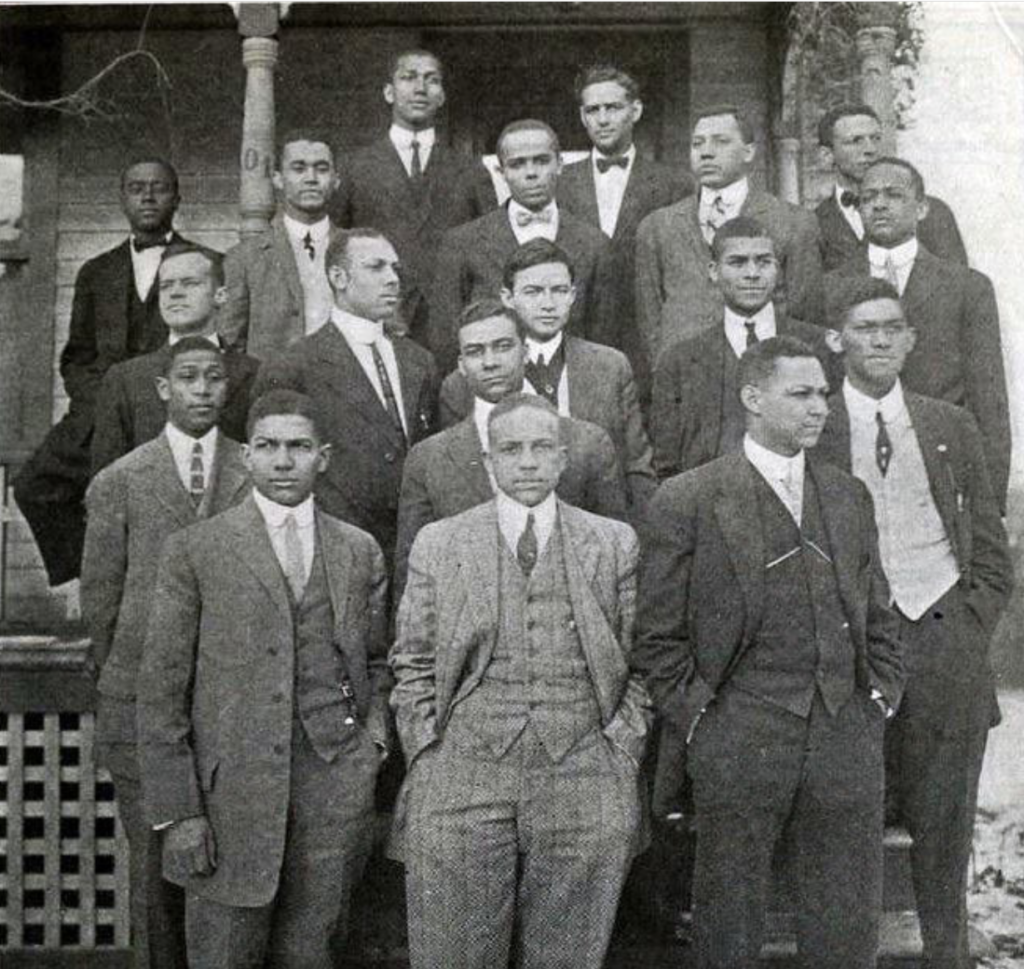
It was in this house where a fellowship of young men lived and others would meet. They would form a fellowship committed to the academic success at Michigan. Like many other small groups in the United States, they were inspired by Dr. W.E.B. Dubois and adopted a philosophy of leadership, uplift and scholastic excellence. They were mature students, serious-minded as reflected in the strict commitment to Robert Rules of Order, timeliness and scholarship. News of this new fraternity Alpha Phi Alpha at Cornell spread throughout the leading academic institutions including Yale, Columbia, Harvard, Michigan and importantly, Howard University.
In the United States, other such groups emerged at academic institutions, including medical students at Ohio State University (Omusu), Chicago Medical School, the Columbia Organization, the University of Minnesota and Alpha Phi Alpha Fraternity, Cornell. At Howard University, the Honor Students received permission from its President Thirkield and Dean Kelly Miller (Honorary), 1907 to establish Beta Chapter leading to the expansion of Alpha Phi Alpha.
At Yale University in the spring of 1906 William M. Thorne would graduate and that same year enroll in the University of Michigan Medical School. The African American students were aware of the Alpha Phi Alpha fraternity that had emerged at Cornell and Howard. William was from Charleston SC, as well as his close friend Augustus G. Purvis. Both had attended Mount Hermon School. Augustus had transferred from Wesleyan University in Middleton Connecticut in 1908 and he too would enroll at the Michigan Medical School in 1908.
It can only be assumed that the two live together in the house on Catherine Street. There were other serious students who would meet at the house and formed what would be called (for lack of another name) a Group of Fellows. They would organize, elect officers, and write a preamble, constitution and bylaws. Also at Yale at this time was Philip Thorne, a friend (possibly a relative) and former classmate of Roscoe Giles of Cornell University, a leader in the young fraternity.
In November 1908 medical student William Thorne (president of the Fellows) would write a letter to Roscoe Giles at Cornell University requesting information about Alpha Phi Alpha.
Second General President Roscoe Giles: “On November 29, 1908, a letter was received from the University of Michigan stating that the Fellows there were considering the matter of a chapter at the school.” After an exchange of correspondences, President Thorne asked Augustus A. Williams to send a second formal letter after meeting with the Fellows on Catherine Street. At this formal meeting in December a second letter went by Augustus A. Williams (a pharmacy student) would later send a second and specific letter on behalf of the group about establishing a chapter at Michigan.
1017 Catherine Street, Ann Arbor, Michigan,
December 31, 1908.
Mr. Roscoe Giles, Cornell University
Dear Sir:
You have been recommended to me by Mr. Thorne of Yale University, as a source of information concerning a colored fraternity at your school and I would consider it a great favor if you would answer the following questions:
Has your fraternity chapters in other colleges? To which do you belong? How should a body of fellows proceed to become affiliated with your fraternity?
Send us all of the information possible, concerning your fraternity, including printed matter, if any. Thank you in advance for an early reply;
I am, sincerely,
Augustus A. Williams U. of M., ‘09”
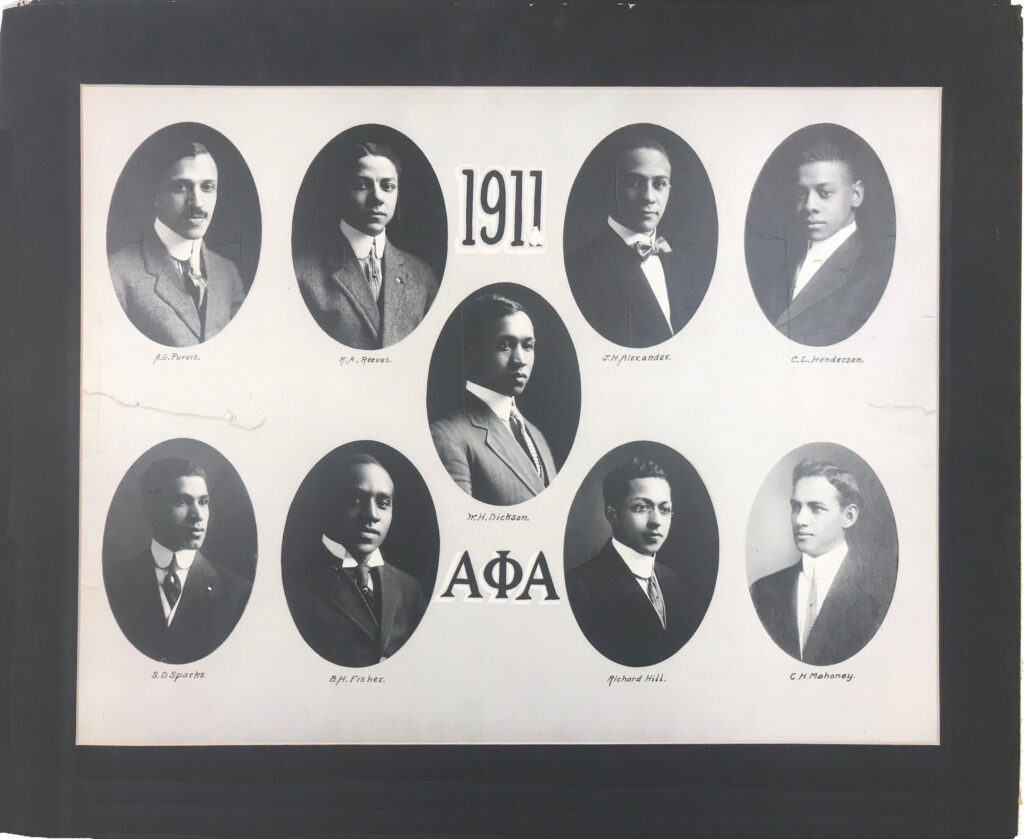
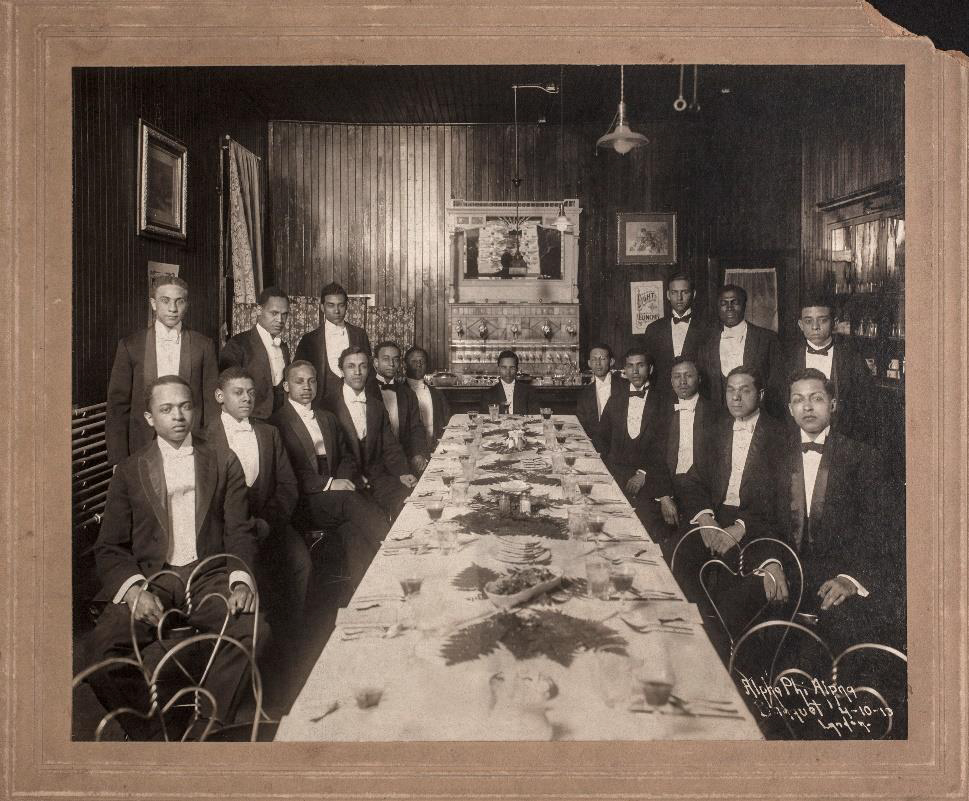
This would lead to several communications throughout early 1909 that would eventually lead to official recognition and Jewel Henry A. Callis establishing April 10, 1909 as the founding date of Epsilon Chapter. Zeta Chapter at Yale University was established on the same date. One of the ten founding members of Epsilon Chapter was Stephen D. Sparks, a dental student and leader in the fraternity. Brother Sparks would go on to charter the Gamma Lambda Chapter in Detroit, Michigan in 1919. Law student Lindsay Johnson, engineering student Cornelius L. Henderson, his brother, medical student James L. Henderson, and medical student Moses E. Morton were a few of the first initiates in May 1909 and were also Gamma Lambda charter members. They all played a major role in the foundation and development of Alpha Phi Alpha Fraternity, with many serving as national officers in the organization.
Charles A. Roxborough and Michigan Law school alumni Oscar W. Baker and were also very familiar with the Fellows Group on Catherine St, along with law students Julian P. Rodgers and Charles H. Mahoney. All would become members within six months in 1909. Roxborough and Mahoney would also go on to become Gamma Lambda charter members.
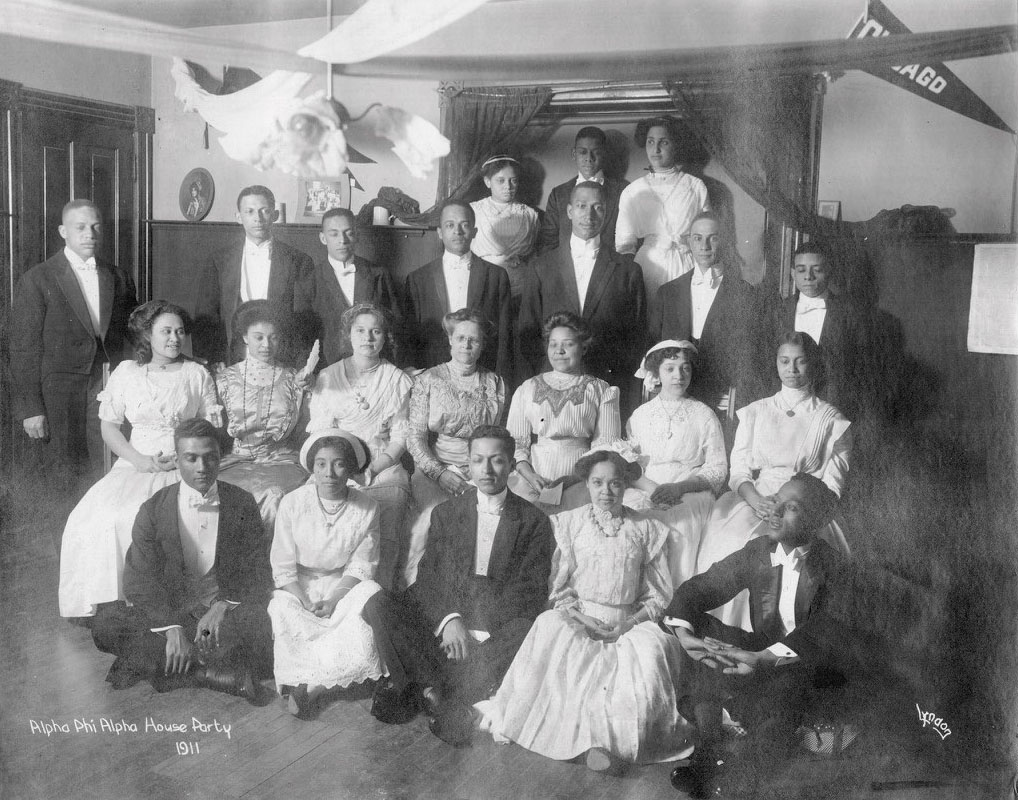
In The year of 1909, Brother Callis came to Ann Arbor and created another Chapter to one of the greatest Fraternities of the Negro race. Every year since then we have sent out on the world’s great battlefield, men in the different walks of life bearing somewhere on their anatomy the stamp of Epsilon
So much has been said of the Alumni and so many plans have been formulated to insure their interest that we have adopted this plan of telling all members of the Fraternity who and what as well as where our Alumni are
Join us together in one chain of brotherhood that will at some future time encircle the globe and make Alpha Phi Alpha so synonymous with success that it will become the password into that greater world toward which we all are striving.[2]
– Bro. J. A. White, Epsilon 1914
The Epsilon Men from the Alpha House on 1017 Catherine St. Ann Arbor 1909 remained close knit group (including W.E.B. Dubois) throughout the first part of the 20th century. They started the first two African American Hospitals in Detroit, lead the largest NAACP chapter and Urban League for 50 years, established the first black bank of Chicago, designed and built the Ambassador Bridge and the Windsor Tunnel connecting the United States to Canada, founded the first Alpha Alumni chapter, the New York City, Detroit and Baltimore alumni chapters, the Detroit Iota Boule, Cleveland Boule, lead the National Boule 1937-49, lead the desegregation of University of Michigan dorm systems lead the legal defense of Dr. Ossian Sweet, founded the Detroit Medical society of the National Medical Association, won the first United States Supreme Court civil rights case and lead the desegregation of all the Detroit hospitals 1961, and founded banks and insurance companies in Mount Bayou, Chicago and Detroit. As professors they have endowed scholarships. There are scores of doctors, lawyers, and educators, a host of Phi Beta Kappa members, Olympians, All-Americans, engineers, professors and U.S. Ambassadors, and they founded the MLK Scholarship Fund for students at U-M. What a great legacy of the University of Michigan Alphas to set the foundation for the Gamma Lambda Chapter.
[1] The Michigan Daily. “Michigan Third in Negro Enrollment.” December 1, 1912, 23(23), p. 2.
[2] The Sphinx, Summer June 1915, 1(2), p. 2.